Tarangire is the park many northern-circuit itineraries treat as a warm-up and most visitors wish they had given more time. It sits about a two-hour drive south-west of Arusha, which makes it the natural first or last stop on a classic Tanzania safari — the place you cut your teeth before the Serengeti, or the quiet finale on the way back. At roughly 2,850 square kilometres it is one of the larger parks in the country, yet it draws only a fraction of the traffic that funnels into the Ngorongoro Crater and the Serengeti plains.
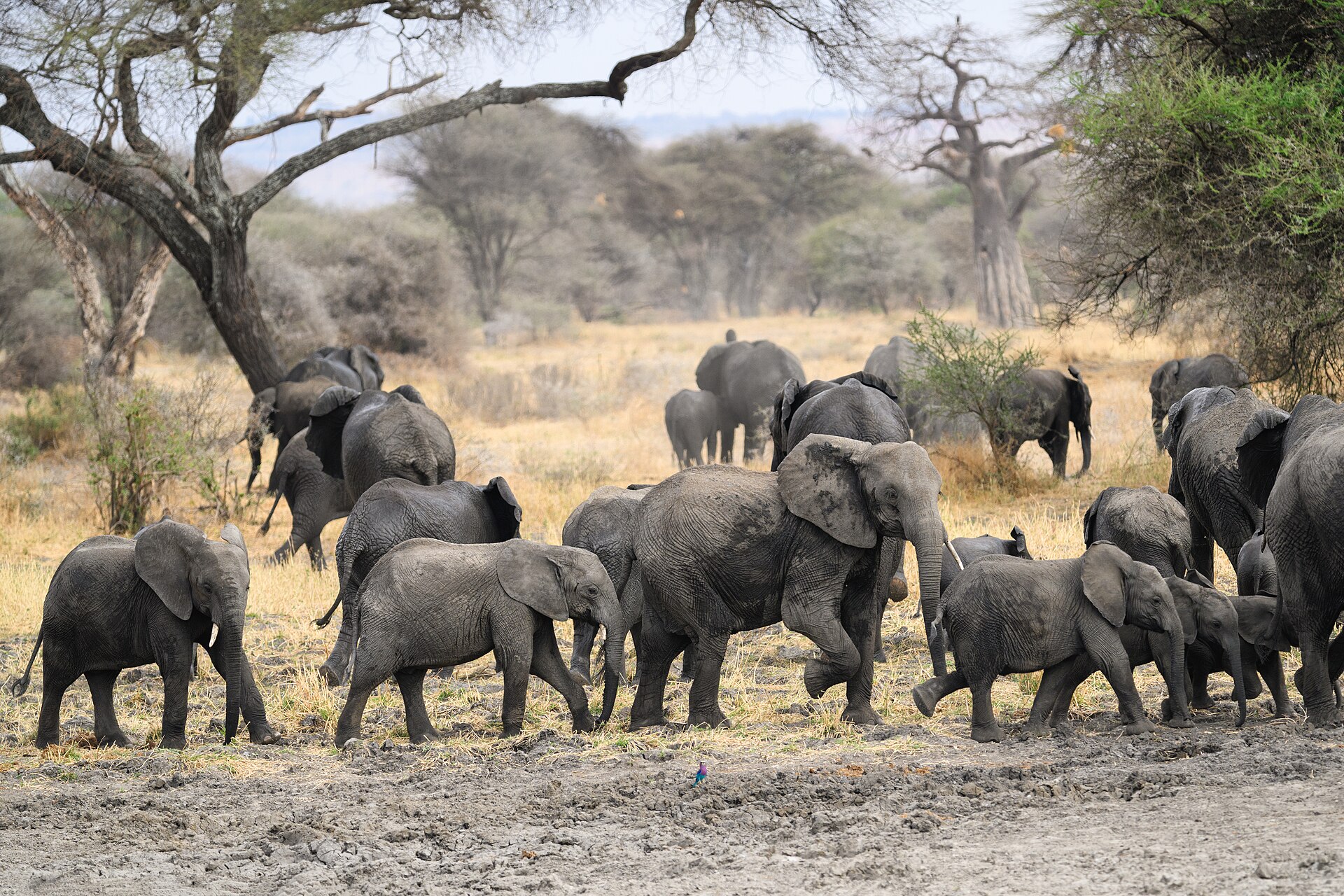
Two things define it: elephants and baobabs. Tarangire holds some of the largest elephant herds in northern Tanzania, and its landscape of ancient, swollen- trunked baobab trees looks like nowhere else on the circuit. Get the timing right and it delivers game viewing that rivals the big names, with room to breathe.
The river that runs the park
Everything in Tarangire keys off the river it is named after. The Tarangire River is the park’s dry-season lifeline — one of the few permanent sources of water in a landscape that bakes hard once the rains stop. As the surrounding country dries out, roughly from June through October, animals from a much wider area are drawn inward to drink, and the riverbanks become the stage for the whole park.
This is what makes Tarangire’s dry season so productive. Elephants, zebra, wildebeest, buffalo, giraffe and gazelle concentrate along the water in real numbers, and the predators follow: lion prides work the herds, and leopard and cheetah are both present if you are lucky. The density is the point. Where a Serengeti drive can mean long stretches of empty plain, a good dry-season morning here can be one sighting after another within a fairly small area.
Elephants and the baobab country
Tarangire’s elephants are its signature. In the dry months hundreds gather along the river, often in multiple family groups at once, and watching a large herd move through the baobabs — calves included, digging for water, stripping bark, dust-bathing — is the image most people carry home. It is one of the most reliable places in the north to see elephants in real quantity rather than ones and twos.
The baobabs are the other half of the picture. These giant, fire-resistant trees can live for centuries and store thousands of litres of water in their trunks, which is exactly why elephants gouge them. Scattered across the rolling grassland in their hundreds, they give Tarangire a prehistoric, almost stage-set quality that photographs beautifully in the low light of early morning and late afternoon. The park is also known for the local sight of lions and pythons draped in the branches of trees — not guaranteed on any given drive, but part of its character.
A birder’s park
Tarangire is one of the richest birding destinations in Tanzania, with more than 500 recorded species. The seasonal Silale swamp in the park’s south is a magnet for water-associated birds, and the mix of acacia woodland, grassland and riverine habitat supports everything from raptors and hornbills to the outsized kori bustard and the ground-dwelling flocks that give the park its texture. Birding peaks in the green season, when migrants arrive and resident species come into breeding plumage — a genuine reason to visit at what most people consider the “wrong” time of year.
Dry season versus green season
The single most important decision about Tarangire is when to come, because the two halves of the year offer almost opposite experiences.
- Dry season (June–October) is the classic choice and the best window for wildlife. With water scarce elsewhere, game concentrates along the river in the numbers Tarangire is famous for. Skies are clear, vegetation is thin and animals are easier to spot. It is also the busier, pricier season, though the park never feels crowded by northern-circuit standards.
- Green season (November–May) flips the equation. The rains spread water across the wider ecosystem, so many animals disperse out of the park and game is harder to find. In return you get lush, green landscapes, the year’s best birding, newborn animals, and far fewer vehicles at lower prices. It is the quieter, more atmospheric option — with the honest caveat that big-game sightings take more patience.
Neither is wrong. If wildlife density is your priority, come in the dry season. If you value solitude, birdlife and green scenery and can accept a slower game count, the green months reward you.
How long, and how it fits a trip
Tarangire is usually a short stop rather than a destination in its own right — most people visit as a full day trip from Arusha or spend one or two nights before pushing on. That is generally enough to enjoy the river circuit and the elephants without diminishing returns. A guide and a 4x4 are required, as in all Tanzanian parks.
Because of its position, Tarangire pairs naturally with the rest of the northern circuit. The standard flow links it with nearby Lake Manyara, the Ngorongoro Crater and the Serengeti, often in that order heading west. Slotting it in at the start eases you into safari life close to Arusha; saving it for the end gives a strong, elephant-heavy send-off. Either way it is an easy addition, not a detour.
Planning your visit
Tarangire rewards travellers who treat it as more than a box to tick on the way to the Serengeti. Browse the available Tarangire tours, compare your options for where to stay in and around the park, or read our Tarangire safari guide for a fuller look at the seasons, the wildlife and how to build it into a northern-circuit trip.


