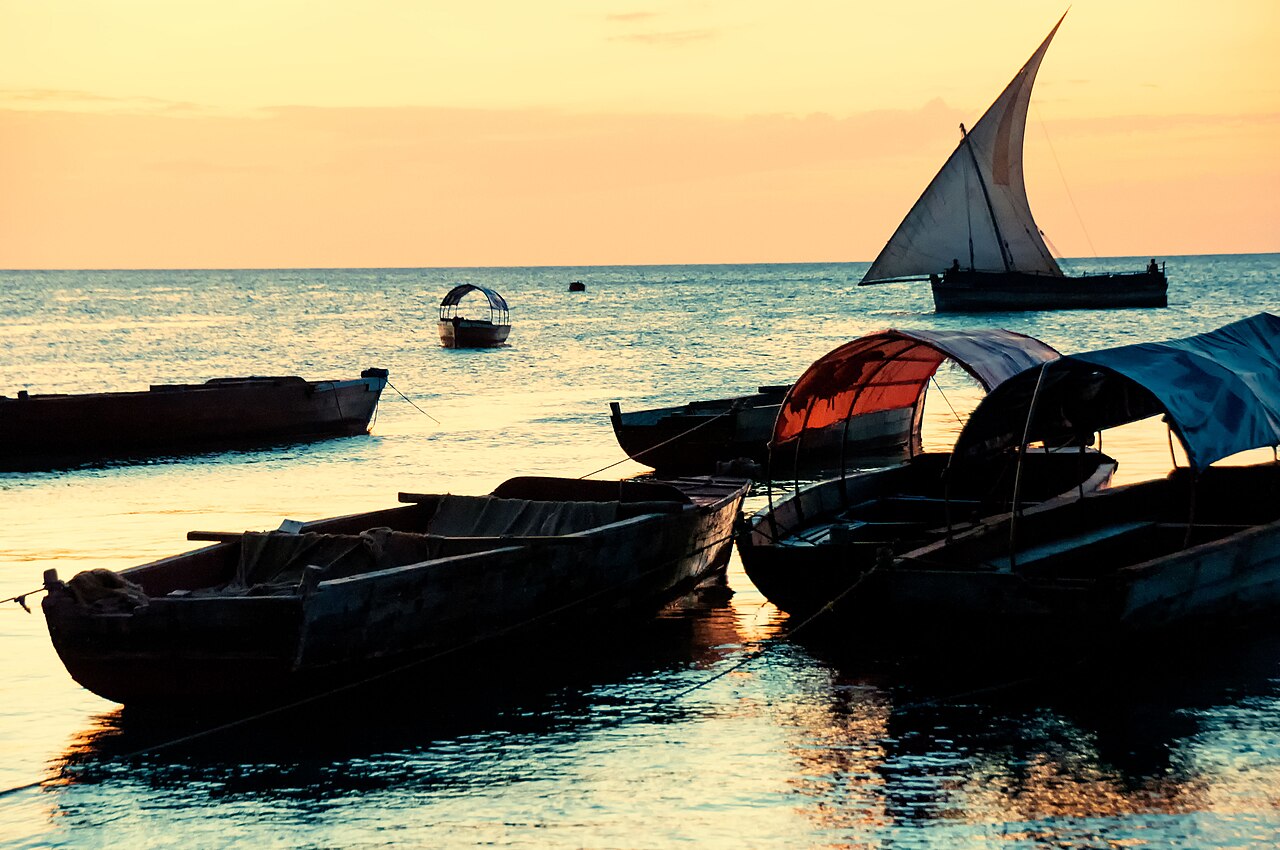
Zanzibar is where a Tanzania trip changes gear. After the early alarms and dust of the safari circuit, the archipelago hands you warm water, an hour that no longer matters, and one of the most layered cultures on the Indian Ocean. Most people come for the beaches and leave talking about Stone Town.
The name covers a small archipelago off the Tanzanian coast — the main island, Unguja, is the one nearly everyone means by “Zanzibar,” with quieter Pemba to the north. A short flight from Arusha or Dar es Salaam drops you into a place that feels a world away from the mainland: Swahili at its core, shaped over centuries by Persian, Arab, Indian and European traders who came for cloves and left their architecture, food and faith behind.
Stone Town: the heart of it
Give Stone Town at least a full day. The old quarter is a UNESCO World Heritage Site and a genuine working town, not a museum — a dense weave of coral-stone houses, carved wooden doors, mosques, bazaars and dead-end alleys that no map quite tames. Getting a little lost is the point.
Aim for the Old Fort and the House of Wonders on the seafront, the former slave market and Anglican cathedral (a sober, important stop), and the Darajani market if you want the town at full volume. As the sun drops, the Forodhani Gardens night market fires up its grills along the water — uneven quality, great atmosphere, and the easiest introduction to Zanzibari street food.
Stone Town is predominantly Muslim, and a little respect goes a long way: shoulders and knees covered away from the beach resorts, and a lighter footprint during Ramadan, when daytime cafés thin out and the town comes alive after dusk.
Choosing a beach
Not all of Zanzibar’s coast behaves the same way, and picking the wrong side for your plans is the most common mistake visitors make.
- The north (Nungwi and Kendwa) has the island’s most forgiving water. The tide barely interrupts swimming, so you can get in whenever you like. It’s the liveliest end, with the widest choice of hotels, dive shops and sunset bars — Kendwa is known for its full-moon parties.
- The east coast (Paje, Jambiani, Matemwe) is postcard-white and far quieter, but it’s tidal: at low water the sea retreats a long way, exposing seagrass and the women’s seaweed farms that have long been part of the local economy. It’s a beautiful, slower scene — and the reason Paje has become one of the Indian Ocean’s great kitesurfing spots, all steady wind and flat, shallow water.
- The southwest and Michamvi are quieter still, with sunset-facing beaches and The Rock, the much-photographed restaurant perched on its own outcrop in the sea.
If your priority is swimming and nightlife, go north. If it’s space, wind sports and calm, go east — and check the tide tables before you book a room with a “private beach.”
Beyond the sand
The island earns its “Spice Island” nickname on a spice farm tour, a cheap, hands-on half-day among the clove, nutmeg, cinnamon and vanilla that once made Zanzibar one of the world’s great trading prizes. It pairs neatly with a Stone Town walk.
Offshore, Mnemba Atoll off the northeast coast is the island’s best snorkelling and diving, with a good chance of turtles; boats also run from Kizimkazi in the south to see the resident dolphins. Inland, Jozani Forest is the last stronghold of the endemic Zanzibar red colobus monkey, an easy and genuinely worthwhile stop. History-minded travellers can take the short boat to Prison Island (Changuu) to meet its colony of giant Aldabra tortoises.
When to go
Zanzibar runs on the monsoon. The long rains (masika) fall roughly April to May and can wash out a beach holiday; the short rains come around November. The sweet spots are the cooler dry months of June to October and the hot, clear window of December to February. It’s warm and humid year-round — this is the equatorial coast, not the highlands.
Two practical notes: the east coast’s big tidal range means the “best” swimming hours shift daily, and Ramadan reshapes Stone Town’s rhythm, so check the dates if dining and nightlife matter to your trip.
Getting there and around
Most visitors fly into Abeid Amani Karume International Airport (ZNZ) — a short hop from Arusha, Dar es Salaam or Nairobi — which is why the classic Tanzania itinerary ends here, safari first, sea second. The alternative is the fast ferry from Dar es Salaam, around two hours across the channel. On the island, taxis and pre-arranged transfers are the simplest way between Stone Town and the beaches; distances are short but roads are slow.
Ready to plan the island? Browse the Zanzibar tours, see where to stay by area, or read our guide to the best things to do here.


