A day in the Ngorongoro Crater is unlike the rest of a Tanzania safari, and not only because of what lives on the floor. You spend the morning descending into a closed bowl 600 metres deep, work a compact grassland where the animals barely move on, and climb back out by early afternoon. It is the most concentrated game drive on the northern circuit — and, on a busy day, the most crowded. Here is what the day actually looks like.
The descent
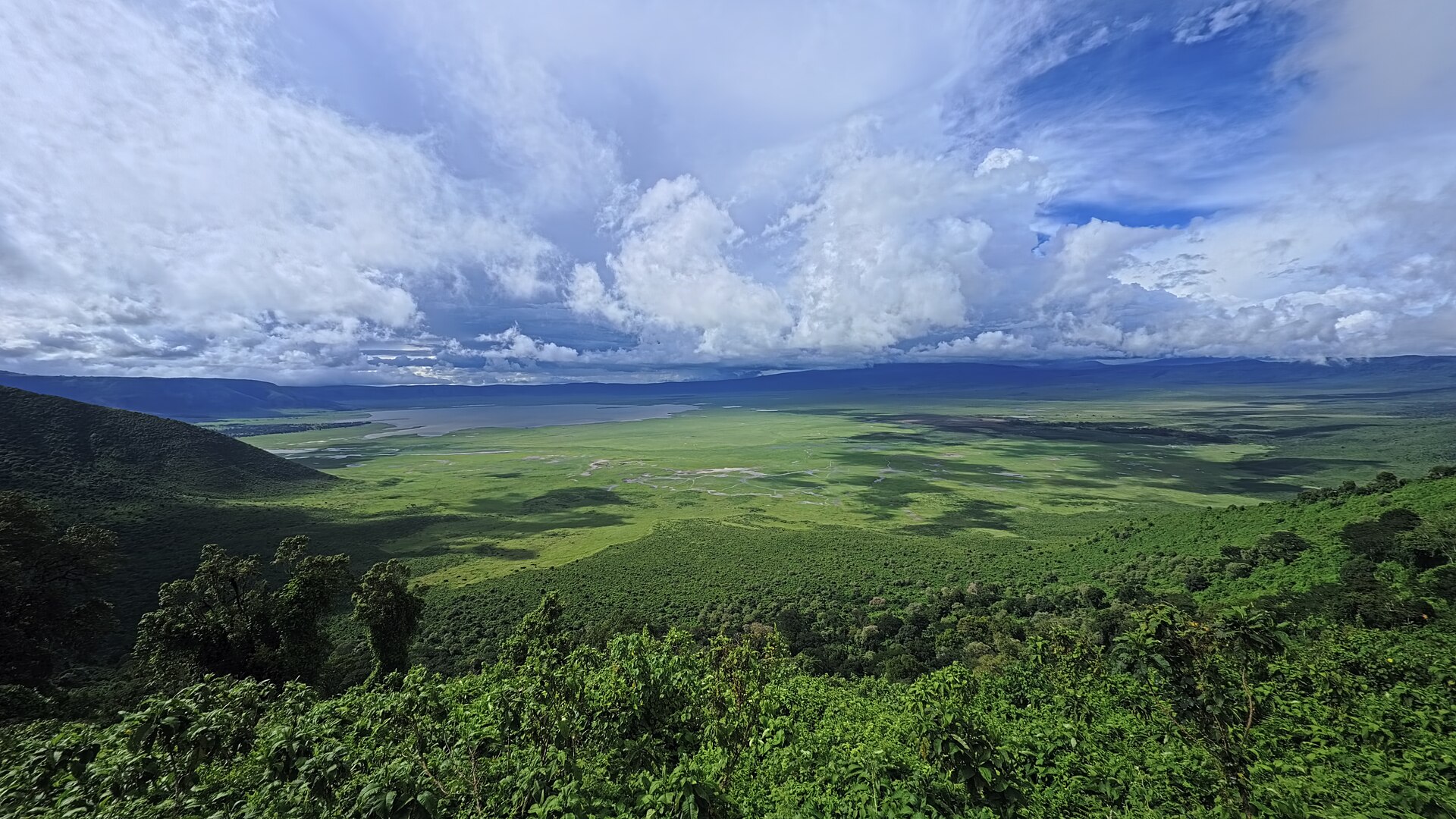
Most crater days start early and cold. The rim sits at around 2,300 metres, and first light up there is often grey, misty and genuinely chilly — a fact that catches out visitors who packed only for equatorial heat. Bring a warm layer for the first hour. Vehicles queue at the descent road, and there is a real advantage to being near the front: the earlier you drop onto the floor, the more of it you have to yourself before the day’s traffic builds. As you wind down the wall the cloud usually thins, and the whole caldera opens up below — grassland, the pale soda lake, and forest patches all ringed by the crater rim. It is one of the great reveals in African travel, and it happens before you’ve seen a single animal.
What you’ll see down there
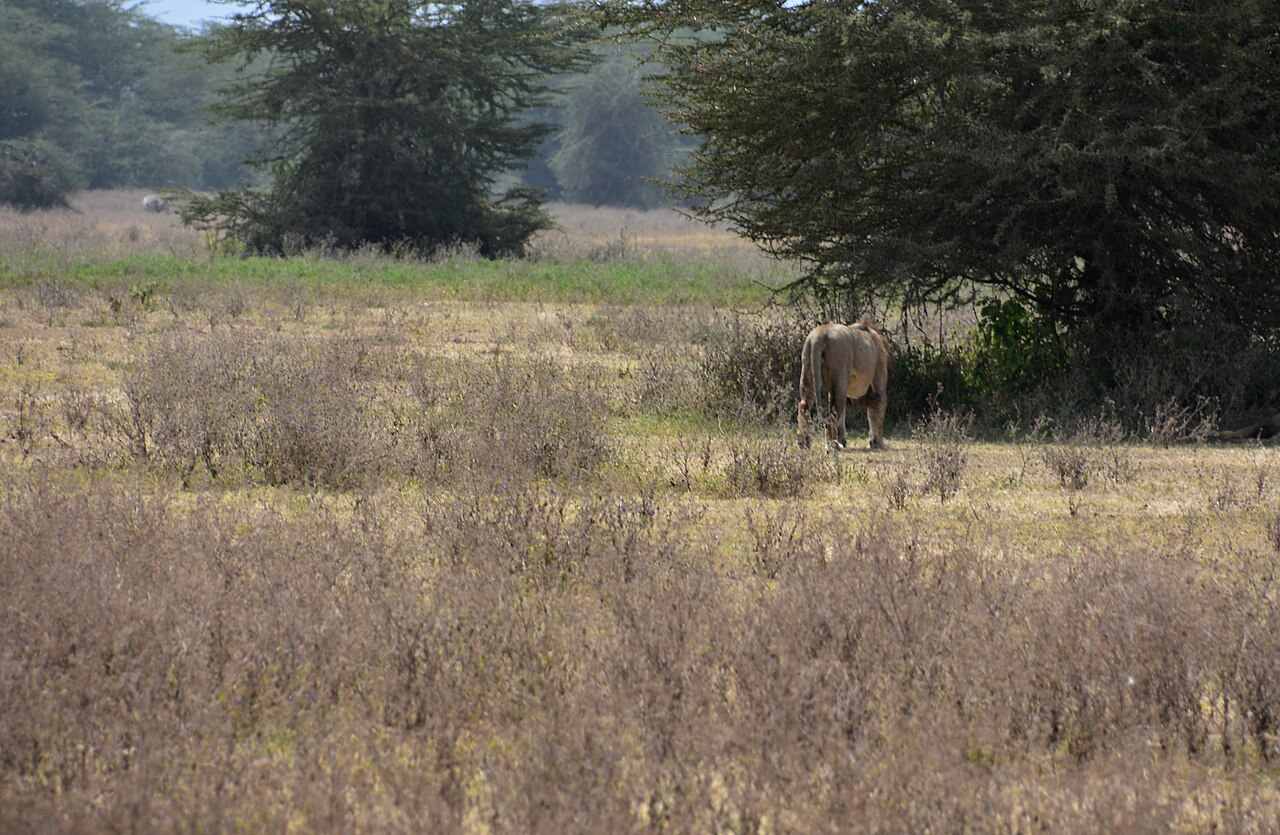
The floor covers roughly 260 square kilometres and holds an estimated 25,000 large animals, so sightings come quickly and close together.
- Black rhino are the headline. Ngorongoro is one of the best places in Africa to see the endangered black rhino, and while they’re often distant — a dark shape out on the open grass — the enclosed floor makes it a realistic hope rather than luck. Guides share sightings, so a rhino on the floor rarely stays a secret for long.
- Lions and elephants are the reliable heavyweights. The crater’s lions carry notably heavy, dark manes, and its elephants tend to be old bulls with large tusks. Buffalo, zebra and wildebeest graze the plains in numbers.
- The soda lake. Lake Magadi (or Makat) draws flamingos and other water birds; in the right conditions the shallows turn pink. Hippos crowd the freshwater pools, and the birdlife around the springs is excellent.
Leopard and cheetah are possible but far less certain — leopards mostly keep to the forested rim rather than the open floor. Still, the chance of all of the Big Five in one day is why the crater is on nearly every northern-circuit itinerary.
Timing, permits and the rules
The crater is tightly regulated, and it helps to know the shape of the day. You descend and ascend on separate designated roads, permits are arranged in advance (your operator handles this), and vehicle time on the floor is capped at around six hours. That window is enough for a full loop with a stop — there is a designated picnic site near a hippo pool where drivers pause for lunch. A licensed guide and a 4x4 are required, and the Conservation Area fees are among the higher ones in the country, which is why the crater is almost always folded into a longer trip rather than done alone. For the wider context — why this is a conservation area rather than a national park, and how the Maasai fit into it — see our Ngorongoro overview.
Making a day of it
If you have more time in the area, the crater floor isn’t the only thing worth doing. On the road towards the Serengeti, Oldupai (Olduvai) Gorge is one of the most significant early-human fossil sites in the world, with a small museum at the site. The neighbouring Empakaai and Olmoti craters are quieter and, unlike Ngorongoro itself, can be walked with a guide — a good option if being stuck in a vehicle all day wears thin. These are easiest to combine if you stay a night on the rim rather than passing straight through.
So, is one day enough?
For the wildlife, one day genuinely is. The floor is small, the animals are concentrated, and a single six-hour circuit covers the headline sightings, black rhino included — which is why so many itineraries treat Ngorongoro as a one-day stop between the Serengeti and Arusha. The case for a second night is not more animals but a better day: an unhurried, early descent ahead of the crowds, the famous view down into the crater from a rim lodge, and time for Oldupai or a walk in a neighbouring crater. Set that against the cost of another night inside the Conservation Area and decide what your trip can carry.
When you’re ready, compare Ngorongoro tours and see where to stay on the rim or nearby before you book.